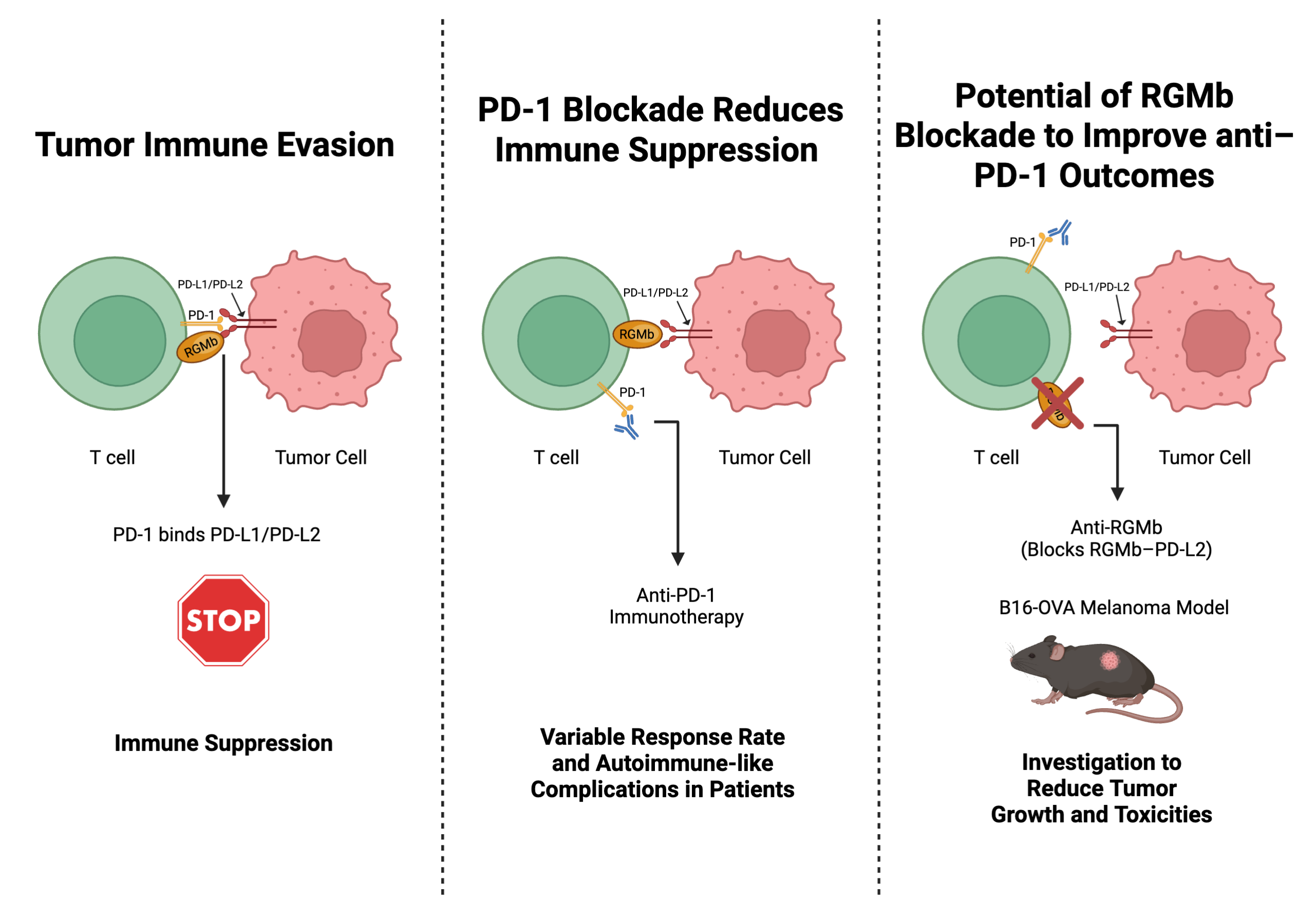



Programmed cell death protein 1 (PD-1) is an inhibitory immune checkpoint receptor expressed
on T cells. PD-1 limits immune activation to maintain tolerance, while its ligands PD-L1 and
PD-L2 can be expressed on tumor cells to regulate immune suppression and evade detection.
Although PD-1 blockade has led to strong clinical responses in multiple cancers, a significant
portion of patients do not respond. This project investigates the role of Repulsive Guidance
Molecule b (RGMb), which was recently described as a promising target to improve antitumor
responses in models of microbiome dependent resistance to PD-1 blockade therapy. Using the
B16-OVA melanoma model, this project will assess how anti-RGMb treatment alters tumor
growth and immune regulation in vivo, complemented by in vitro systems to further interrogate
its role in relevant cell types. Parallel studies in autoimmune models will examine how RGMb
influences immune tolerance, providing insight into mechanisms that may underlie harmful
immune responses associated with checkpoint immunotherapy and guiding the development of
safer, more effective cancer treatments.